


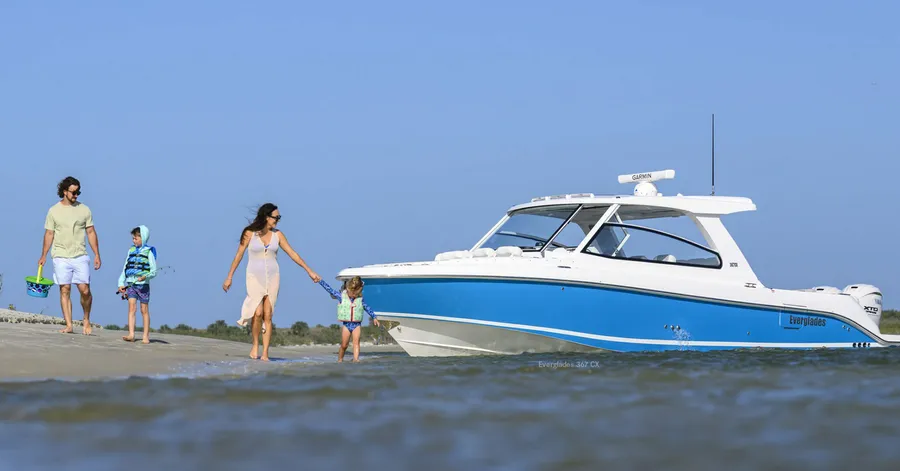
Evaluating a premium vessel across Western Florida's distinct regional waterways—whether preparing to cruise the high-density holiday channels of Clearwater Harbor, navigating the shifting sandbars of Dunedin Pass, or charting open-water routes into the Gulf of Mexico—demands strict operational competence and an absolute commitment to standardized beaching physics. Staging a beaching session along the Florida shoreline or coastal barrier islands requires moving past casual guesswork to implement a structured, mathematical deployment profile. Shifting tidal ranges, reversing wind vectors, and cross-cutting commercial displacement wakes can easily beach a vessel permanently or swamp its transom if it is improperly anchored.
Implementing a rigorous, step-by-step beaching and recovery protocol is your primary line of defense against hull gelcoat erosion, running gear grounding, and close-quarters structural damage at the water's edge.
1. Statutory Access Verification and Local Regulation Audits
Before your hull transitions into a shallow beach approach, you must verify localized municipal zoning codes and state environmental preservation mandates. Failing to identify restricted coastal boundaries can result in severe structural citations or regulatory fines.
- Identify Protected Ecological Boundaries: The Florida Fish and Wildlife Conservation Commission (FWC) enforces strict coastal exclusion zones to safeguard nesting shorebirds, native vegetation, and designated marine life sanctuaries. Ensure your targeted beaching coordinate sits entirely clear of protected wildlife refuges and marked sea turtle nesting habitats.
- Adhere to Localized Velocity Boundaries: Always respect posted speed limits when approaching shallow barrier islands. Dropping your throttle to dead-idle early minimizes your displacement footprint, protects fragile coastal marine life from hull strikes, and prevents premature silt induction into open-loop cooling systems.
2. Micro-Tidal Range Formations and Meteorological Analytics
Western Florida's coastal basins feature dynamic, semi-diurnal tidal cycles that can rapidly alter water columns and beach configurations over a brief afternoon layout.
- Calculate the Tidal Drift Shift: Never beach your boat at the peak of a high-tide cycle without a comprehensive plan for changing water lines. A falling low-tide cycle will rapidly evacuate the water beneath your hull, trapping your platform firmly on the sand flat until the next tidal surge. Conversely, beaching on a low tide requires paying close attention to current reversals to ensure rising water levels do not push your hull directly into shoreline obstructions.
- Monitor Convective Atmospheric Vectors: Constantly track localized weather forecasting updates for sudden afternoon squalls or offshore wind shifts. A sudden meteorological reversal can transform a protected beach cove into a hazardous lee shore, pounding your transom boarding platform with heavy surf rollers.
3. Subsurface Spot Selection and Low-Velocity Approaches
Rushing onto a shoreline blind introduces severe risk of running gear destruction. Executing a safe approach requires careful environmental scanning and deliberate velocity control.
- Analyze Substrate Densities and Gradients: Scan the shoreline topography for firm, hard-packed sand, and avoid soft mud banks or decomposing shell beds that can trap a hull structure. Target a gentle, predictable shoreline slope that permits bow access while keeping your aft propulsion gear safely suspended in deeper water columns. Maintain an expansive safety separation from marked public swimming perimeters.
- Execute Direct Linear Approximations: Align your vessel completely perpendicular to the shoreline to minimize sideways scraping and hull rolling. Reduce your velocity to forward idle, tilt your outboard or sterndrive units upward using your helm trim switches, and allow the bow to gently make contact with the sand. Keep your engine running at idle during early positioning—never cut power until the hull is balanced and stabilized.
4. Dual-Anchor Securing Matrices and Hull Shielding
Simply resting a fiberglass hull on the sand and walking away exposes your asset to severe damage from passing commercial wakes and changing currents. A secure beaching setup mandates a multi-point anchoring strategy.
- Deploy a High-Tensile Bow Anchor: Once the bow touches the sand, have a crew member step off the bow platform into shallow water to secure a primary bow anchor deep into the dry beach substrate, pinning the nose firmly in place.
- Set an Offshore Stern Anchor: To prevent passing wake swells or changing tidal currents from swinging the stern sideways and grounding your expensive propellers, deploy a secondary stern anchor into deeper water astern before your final approach. Adjust your anchor lines to maintain a stable, perpendicular tracking line that keeps the hull suspended safely away from dry sand bars. Position heavy marine fenders along the beam if surrounding boats are staging nearby.
5. Tactical Reboarding Actions and Power-Off Extractions
Extracting a settled vessel from a sandy shoreline requires managing weight allocation and leveraging engine physics properly to prevent mechanical straining.
- Execute Reverse Weight Distributions: When preparing to push off the beach, shift all heavy gear blocks, provisions, and passengers away from the bow bowrider layout and position them entirely within the aft cockpit or stern lounge seats. This strategic weight allocation lifts the bow section cleanly off the sand, reducing friction against the substrate.
- Utilize Slow, Steady Throttle Pulses: Push the boat manually out into deeper water until the hull gains natural buoyancy. Lower your trimmed outboards slightly, verify that the raw-water intake ports sit completely clear of bottom sand layers, and apply a slow, steady reverse throttle detent. Never apply aggressive, high-RPM bursts of throttle in shallow water, as spinning a propeller rapidly in sand causes extreme blade abrasion, destroys internal water pump impellers, and induces heavy sediment directly into your engine cooling galleries.
Technical Frequently Asked Questions
What is the legal speed restriction for operating a watercraft after dark in Florida waters? Unlike jurisdictions with blanket numeric nighttime speed caps, Florida maritime law, enforced by the FWC, mandates that all vessels maintain a "safe speed" at night based on prevailing visibility, weather, and traffic conditions. However, operators must strictly adhere to localized, posted "Slow Speed, Minimum Wake" restrictions, which legally require the hull to ride fully off plane and completely settled in the water column with a minimal wake profile.
Why is running the engine bilge blower mandatory before launching or starting an inboard vessel? Gasoline fuel vapors are heavier than atmospheric air and naturally accumulate in the lowest quadrants of a sealed engine bay or bilge compartment. Florida safety regulations and federal mandates dictate that power-operated exhaust blowers must be activated for a minimum of four continuous minutes prior to starting an inboard or sterndrive engine. This process evacuates any trapped combustible vapors, preventing a catastrophic static-spark explosion inside the hull machinery space.
Sourcing Authorized Marine Assets & Technical Upkeep
Safeguarding your vessel through variable seasonal conditions requires outfitting your platform with components and mechanical structures calibrated to exact manufacturer tolerances.
- Comprehensive New and Pre-Owned Showrooms: To evaluate rough-water hull geometries, test luxury trim lines, or compare the tracking profiles of elite regional brands, explore our complete regional inventories of New Boats and strictly certified Used Boats.
- Advanced Transom Repower Operations: If your existing power plant exhibits low-end throttle lag or lacks modern digital networks near the courtesy docks, outfitting your transom through our specialized Repower Mercury or Repower Yamaha hubs installs advanced control systems for absolute handling precision.
- Certified Multi-Point Systems Maintenance: From testing low-voltage battery capacities under load to replacing raw-water pump impellers or diagnosing hydraulic steering binding, trust our factory-trained technicians at the Tom George Yacht Group Service Center department. For do-it-yourself maintenance, our Parts Center supplies factory-direct filters, zinc anodes, and marine accessories.
Fleet Allocation and Financial Coordination
What structural consumer credit frameworks exist for premium vessel procurement? Our internal Financing office constructs customized consumer portfolios, allowing buyers to seamlessly bundle their high-performance hull selection, reliable outboards, technical navigation electronics, and comprehensive Marine Insurance protections into a single structured loan.
Can I leverage my current boat's equity to transition to a modern rough-water platform? Yes. We facilitate transparent, market-accurate asset evaluations to eliminate personal listing delays. To liquidate your old hull and apply its equity directly toward an upgrade, submit your vessel's technical specifications to our Sell / Trade department.
How do I track upcoming dealer events or connect with Tom George Yacht Group? To learn about our legacy serving Western Florida mariners, visit our About Us page. You can monitor our active schedule of safe-boating seminars, captain safety workshops, and regional boat shows on our Events page, track continuous technical maintenance guides on our Blog section, see verified customer feedback on our Reviews directory, or connect directly with our specialized team members via our Staff index. To review extended service coverages, check our Extended Service Contracts checklist, find current promotions on our Specials page, evaluate secure slip and dry storage configurations on our Marina Storage link, or contact our offices instantly through our Contact hub.