


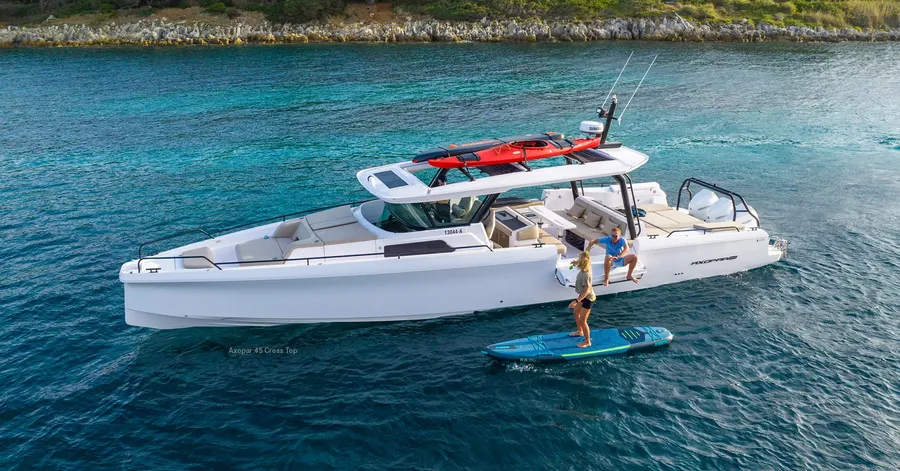
Evaluating a premium vessel across Western Florida's distinct regional waterways—whether preparing to cruise the high-density holiday channels of Clearwater Harbor, navigating the shifting sandbars of Dunedin Pass, or charting open-water routes into the Gulf of Mexico—demands strict operational competence and an absolute commitment to asset value analysis. Over extended seasons of local operation, even the most meticulous mariners hit a transitional threshold where their existing platform no longer aligns with their evolving cruising vision, crew capacity requirements, or mechanical tolerances.
Transitioning to a larger layout, an advanced hull design, or a modern multi-outboard propulsion package requires moving past casual showroom preferences to execute an objective, data-backed evaluation of your platform's operational utility.
1. Divergence of Localized Marine Mission Profiles
The primary indicator that your platform requires an upgrade is a structural mismatch between your current hull architecture and your actual on-water activities. Forcing a vessel into a mission profile it was never engineered to handle compromises ride stability and crew safety.
- Quantify Crew Capacity and Spatial Footprints: As your family dynamic or guest manifest expands, an undersized cockpit footprint results in structural bottlenecks and restricted passenger tracking lanes. If you are regularly forcing gear bags, high-capacity rotomolded coolers, and provisions into active walkways, your layout has outgrown its utility.
- Adapt to Offshore Environmental Realities: If your boating vision has transitioned from casual inland cruising along the Intercoastal Waterway to serious deep-sea fishing adventures or extended weekend crossings to remote coastal keys, your current hull may lack the necessary physical boundaries. Offshore operations demand deep-Vee entries, substantial freeboards, sophisticated hull stabilization systems, and expanded fuel capacities that can only be secured by moving to a larger class of vessel.
2. Accelerating Operational Overhead and Maintenance Compounding
Every marine platform operates on a predictable wear curve. Continuing to inject capital into an aging platform that has passed its mechanical prime diminishes your return on investment and reduces your actual hours on the water.
- Identify Critical Component Fatigue Lifecycle Thresholds: As propulsion blocks accumulate high cyclic engine hours under intense Florida humidity, critical sub-systems—including electrical wire harnesses, hydraulic steering rams, fuel delivery manifolds, and open-loop raw-water components—experience accelerated failure rates.
- Evaluate Financial Compounding Trajectories: If your annual out-of-pocket overhead for emergency repairs, structural gelcoat tracking, and troubleshooting interventions begins to eclipse the predictable carry costs of a newer vessel, you are losing liquidity. Upgrading to modern, reliable systems with active factory warranty protections establishes an organized, predictable financial baseline and eliminates lost weekends at the courtesy slips.
3. Structural Demands for Advanced Technology Integrations
The pace of marine engineering innovation means that older vessels rapidly fall behind in navigation precision, structural safety networks, and digital integration. Retrofitting obsolete helms with modern electronics often yields poor systemic continuity.
- Integrate State-of-the-Art Navigation Platforms: Modern coastal piloting demands next-generation solid-state radar arrays, multi-frequency CHIRP sonar transducers, and real-time satellite overlay plotters. These integrated systems are vital for safely identifying shifting sandbars around dynamic passes or tracking fast-moving afternoon thunderstorm cells over open Gulf waters.
- Leverage Modern Mechanical Innovations: Upgrading grants immediate access to advanced digital helm technologies—such as automated trim tab leveling, integrated joystick docking controls, smart digital switching networks, and virtual anchoring positioning arrays. These features dramatically decrease captain workload and make low-speed close-quarters maneuvers completely stress-free.
4. Maximizing Secondary Market Valuations and Trade Equity
Timing the liquidation of your current marine asset is an essential metric in wealth preservation. Waiting too long to trade up accelerates depreciation and can limit your purchasing power on your next acquisition.
- Leverage Strong Brand Reputations: High-tier production hulls that possess clean, documented maintenance logs retain substantial secondary value. Capitalizing on favorable market windows allows you to extract maximum residual equity from your current boat, using that capital block to offset the acquisition cost of your next premium yacht.
- Optimize Single-Transaction Transitions: Transitioning through an established corporate marine portfolio removes the marketing delays, showing hazards, and logistical friction associated with selling an asset independently. This streamlined approach ensures a smooth trade-in timeline, allowing you to move your capital directly from your old transom to your new platform without missing a single holiday weekend on the water.
Technical Frequently Asked Questions
What is the legal speed restriction for operating a watercraft after dark in Florida waters? Unlike jurisdictions with blanket numeric nighttime speed caps, Florida maritime law, enforced by the Florida Fish and Wildlife Conservation Commission (FWC), mandates that all vessels maintain a "safe speed" at night based on prevailing visibility, weather, and traffic conditions. However, operators must strictly adhere to localized, posted "Slow Speed, Minimum Wake" restrictions, which legally require the hull to ride fully off plane and completely settled in the water column with a minimal wake profile.
Why is running the engine bilge blower mandatory before launching or starting an inboard vessel? Gasoline fuel vapors are heavier than atmospheric air and naturally accumulate in the lowest quadrants of a sealed engine bay or bilge compartment. Florida safety regulations and federal mandates dictate that power-operated exhaust blowers must be activated for a minimum of four continuous minutes prior to starting an inboard or sterndrive engine. This process evacuates any trapped combustible vapors, preventing a catastrophic static-spark explosion inside the hull machinery space.
Sourcing Authorized Marine Assets & Technical Upkeep
Safeguarding your vessel through variable seasonal conditions requires outfitting your platform with components and mechanical structures calibrated to exact manufacturer tolerances.
- Comprehensive New and Pre-Owned Showrooms: To evaluate rough-water hull geometries, test luxury trim lines, or compare the tracking profiles of elite regional brands, explore our complete regional inventories of New Boats and strictly certified Used Boats.
- Advanced Transom Repower Operations: If your existing power plant exhibits low-end throttle lag or lacks modern digital networks near the courtesy docks, outfitting your transom through our specialized Repower Mercury or Repower Yamaha hubs installs advanced control systems for absolute handling precision.
- Certified Multi-Point Systems Maintenance: From testing low-voltage battery capacities under load to replacing raw-water pump impellers or diagnosing hydraulic steering binding, trust our factory-trained technicians at the TGYG Service Center department. For do-it-yourself maintenance, our Parts Center supplies factory-direct filters, zinc anodes, and marine accessories.
Fleet Allocation and Financial Coordination
What structural consumer credit frameworks exist for premium vessel procurement? Our internal Financing office constructs customized consumer portfolios, allowing buyers to seamlessly bundle their high-performance hull selection, reliable outboards, technical navigation electronics, and comprehensive Marine Insurance protections into a single structured loan.
Can I leverage my current boat's equity to transition to a modern rough-water platform? Yes. We facilitate transparent, market-accurate asset evaluations to eliminate personal listing delays. To liquidate your old hull and apply its equity directly toward an upgrade, submit your vessel's technical specifications to our Sell / Trade department.
How do I track upcoming dealer events or connect with Tom George Yacht Group? To learn about our legacy serving Western Florida mariners, visit our About Us page. You can monitor our active schedule of safe-boating seminars, captain safety workshops, and regional boat shows on our Events page, track continuous technical maintenance guides on our Blog section, see verified customer feedback on our Reviews directory, or connect directly with our specialized team members via our Staff index. To review extended service coverages, check our Extended Service Contracts checklist, find current promotions on our Specials page, evaluate secure slip availabilities on our Marina Storage port, or contact our offices instantly through our Contact hub.